Scientific Name
Panthera leo krugeri
Also called: Transvaal lion
Description
The lion is known as „The King of the Jungle” and has not earned the title for no reason. Its sizeable body and ferocious killing ability qualify it for the honorary title. Its muscular, compact body and strong front legs make it easy to catch prey. It has a retractable jaws, not to mention a rough tongue that makes it easy to tear down its prey. The manes in male lions give them a majestic look, and once they roar, you can hear them 8 kilometers away. Only male lions have a mane, which is one of its most recognizable and well known features. When the lion is young, the mane starts out as a yellowish color and then tends to darken as the lion gets older. At maturity, the mane tends to be a dark brown color.
How tall is a lion?
The shoulder height of a male lion is 4 ft. while a female is 3.5 ft. The average head-body length of a male is 6-10 ft. The head-body length of a female lion is 5-9 ft. The longest African Lion ever measured was almost 11 feet including its tail! The tail length of a lion is 2 ft. to 3 ft. The lion is the second tallest big cat, second only to the tiger (The average length of a tiger is over 10 ft).
How tall is a lion on its hind legs?
When the male lion stands on its hind legs, it has a height of 13 ft.
How much does a lion weigh?
The average weight of a male lion is between 400 – 550 pounds and the female lion weighs between 260 – 400 pounds. The largest lion on record weighed over 800 pounds! It is a very large cat and measures around 8 to 10 feet long (not including the tail). The African lion is a skilled hunter and has a body designed perfectly for it. It uses its back legs for pouncing and its front legs for grabbing and bringing down prey, while its strong jaws and teeth can bite into even its larger animal prey.
Food
The African lion is a carnivore and primarily hunts large to medium sized animals. To catch its meals, the lion quietly stalks its prey until it is within about 100 feet of it. Then it rushes at the prey and tries to prevent it from running away by batting at it with its strong arms or grabs onto it with its super sharp claws. To kill its prey, the lion will usually bite the animal’s throat or muzzle to suffocate it. Once the prey is captured, the entire lion pride usually takes part in eating it together. It is estimated that about ¼ of all lion hunts are successful. Lions hunt mostly at night since they have terrific night vision and the cooler weather makes it less strenuous. Once they are full, they rest for 16-20 hours a day.
What do Lions eat?
In the wild, lions eat a large variety of large prey such as zebra, buffalo, giraffe, wildebeest, wild hogs, and antelope. However, when food is scarce they may eat mice, birds, hares, and other reptiles. In order to survive and be healthy, a male lion needs about 15 lbs of meat each day and females need about 11 lbs.
Do lions eat hyenas?
Yes, but it is rare. Lions don’t hunt and eat hyenas for food normally, but they will kill them if a lion sees the hyena competing for its food. They have been seldom observed eating the hyenas after killing them.
Habitat
There are a few lions in Asia, while most lions are in Africa. The African Lion can be found throughout many parts of the continent of Africa, but they mostly live in the southeastern part. They prefer savannas, grassy plains, and semi deserts.
Do lions live in the jungle?
Despite their title, lions do not live in the jungle.
What animal is the king of the jungle?
Lions are called the „King of the Jungle.”
Predators
As an apex predator, the African Lion has almost no predators as it is very high on the food chain. Its most vulnerable time is during infancy and the early years of its life as it may not be able to fight for enough of the food left over from prey to survive and grow. It is also more vulnerable during this time to other predators or male lions who are trying to move into their pride. If a lion cub reaches adulthood, it typically lives for around 13 – 25 years. Those in captivity can live for up to 30 years. The main predators of lions are humans but they can also sometimes be killed by elephants, hyenas, and buffaloes. Most wild adult lions die due to food scarcity, diseases, injuries, and other natural threats.
Social Structure
Surprisingly, the lion is the only animal of the big cats that is very social. Their life revolves around the lion pride which can consist of around 3 – 30 lions. Usually, all of the female lions in a pride are related, but males usually join a group of females and stay for an indefinite period of time. Male lions have even been observed joining multiple prides at the same time. When threatened by outside males, male lions in a pride will usually join together to defend their group of female lions. Most of the hunting of prey in a pride is a done by the females lions.
Why Do Lions Roar?
Lions are territorial and roar to give warning to any approaching threat. Whenever they face a defeat, they also roar to air their frustrations. Since they are social beings, their roaring also informs other male lions of where they are. Meaning they use it as a means of communication. Note that male lions use roaring, intending to show off and get a mate.
Birth & Offspring
Typically male lions do not compete for the right to mate female lions within their pride. Usually the first male lion to encounter a female in heat is given the right to mate with her. The gestation period for African Lions is around 100 to 120 days after conception. Lion litters usually consist of around 1 – 6 cubs (avg. is 2 or 3). Once born, cubs typically weigh less than 5 pounds and open their eyes in around 3 weeks. As soon as 3 months after being born, baby cubs may be seen with their mother on hunting trips and will usually stay near their mother’s side for the first two years of life.
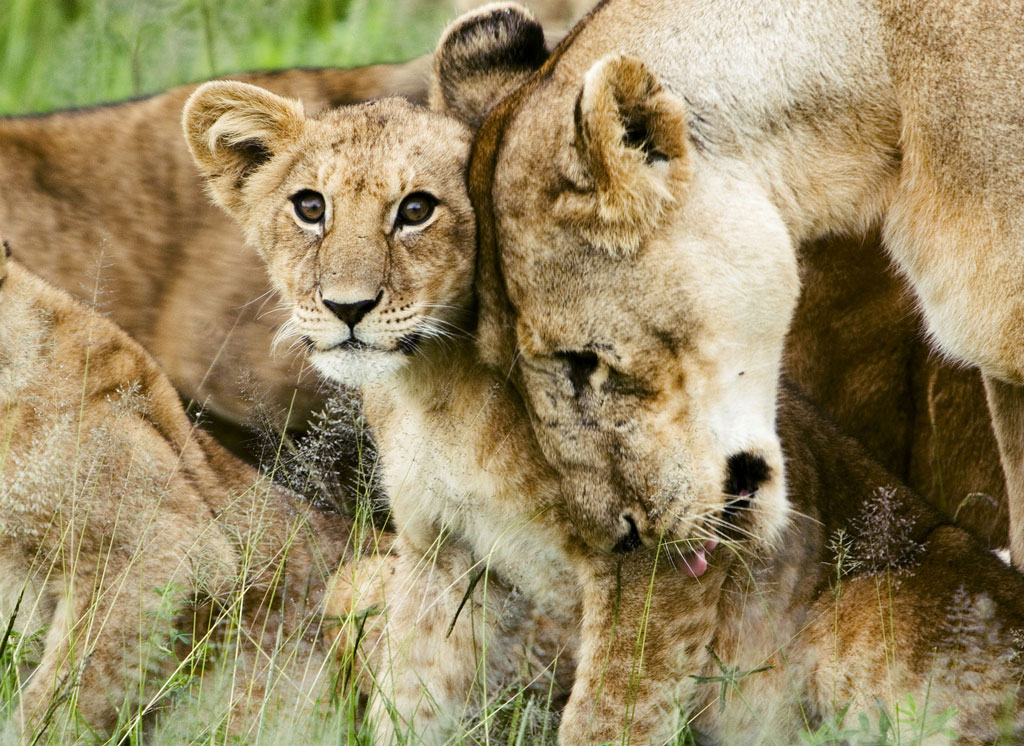
The expectant lion isolates itself to give birth. The cubs have got some tawny black spots that disappear as they grow. The birth weight of a cub is 3 pounds, while its height is a few inches. The cub doesn’t open the eyes or move immediately. Some may open their eyes on the third day, while others may delay to the eleventh day. The cubs may take 10-15 days to start walking.
Weaning starts from week 10 and ends at 10 months. Note that the mother may take up to two months before introducing her cubs to the pride. The mother keeps on providing for the cub until age 2, when she teaches them hunting skills. By the time they reach 3-4 years, they are fully grown. The female ones can give birth while the male ones get kicked out by male adults from the pride to reduce competition.
Senses
African lions have very good sense of smell as well as eyesight and hearing. Their quick reflexes also allow them to keep up with very agile and fast prey such as the antelope.
Famous Lions
Fictional
- Aslan (The Chronicles of Narnia: The Lion, the Witch and the Wardrobe)
- Alex (Madagascar)
- Kimba (Kimba the White Lion)
- Lion (Steven Universe)
- Mayor Lionheart (Zootopia)
- Mufasa (The Lion King)
- Nala (The Lion King)
- Nemean Lion (Greek mythology)
- Prince John (Disney’s Robin Hood)
- Sarabi (The Lion King)
- Sarafina (The Lion King)
- Scar (The Lion King)
- Simba (The Lion King)
- The Cowardly Lion (Wizard of Oz)
Historical
- BiBi (Big Cat Diary)
- Cecil (Zimbabwe)
- Christian the Lion
- Elsa the lioness
- Leo (MGM Lion)
- Mapogo lion coalition
- Tsavo Man-Eaters (Kenya)
- The Man-Eaters of Njombe (Tanzania)

Lydia King is a huge animal lover and has always been fascinated with learning about the animal kingdom. She enjoys writing about anything animal related from scientific information about rare species to animal references in pop culture.