Scientific Name
Rhinoceros Unicornis
Also Known as: Greater Asian Rhinoceros
Description
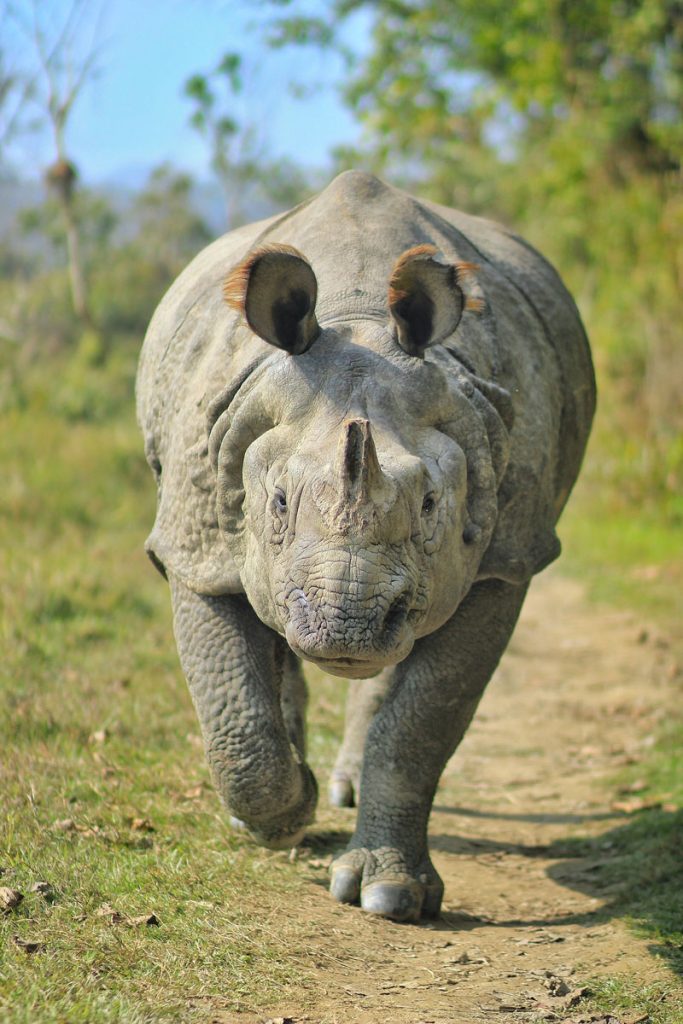
Also known as the Greater One-Horned Rhinoceros or Indian Rhino, the Greater Indian Rhinoceros is the second-largest living rhino, right behind the white rhinoceros.
Unlike other African rhinos which have two horns, the Indian Rhino is characterized by a single horn, hence its scientific name- Rhinoceros Unicornis.
The rhino is characterized by a very thick grey-brown skin which consists of numerous bumps and folds. Their segmented skin gives it a natural, heavily armored body appearance.
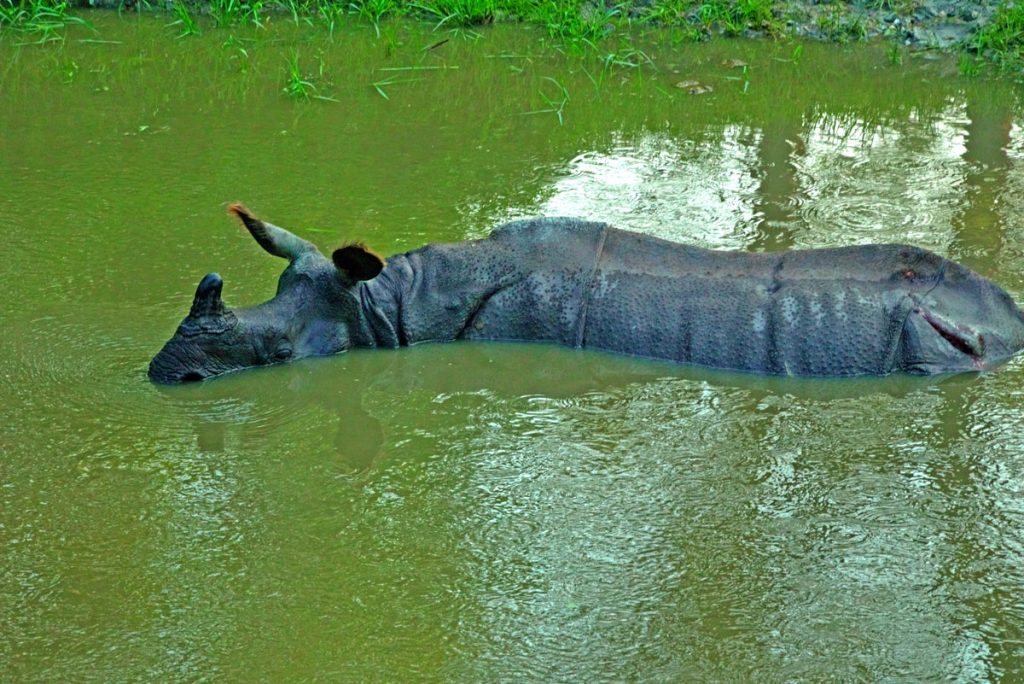
The Indian Rhino is native to the Indian subcontinent and it’s primarily a forest habitat (including grasslands and savannah). The rhino spends most of its time wallowing in mud pools and water which is mainly to protect its skin. It’s an excellent swimmer. It’s also extremely fast, running at speeds of up to 34 miles per hour for short periods.
The Indian Rhino’s horn is primarily made of pure keratin, just like human fingernails.
Food
The Indian Rhinoceros are grazers, with their diets mainly consisting of grass as well as leaves, tree and shrub branches, fruits, and as well as aquatic plants.
Habitat
The Indian Rhino once upon a time ranged across the entire northern region of the Indian Subcontinent. However, as of today, these rhinos are now concentrated in a few regions like northwest Bengal, southern Nepal, and Brahmaputra Valley. In particular, this rhinoceros can be found in the Terai right at the foot of the Himalayas. Indian Rhinos are currently regionally extinct in Pakistan.
Social Structure
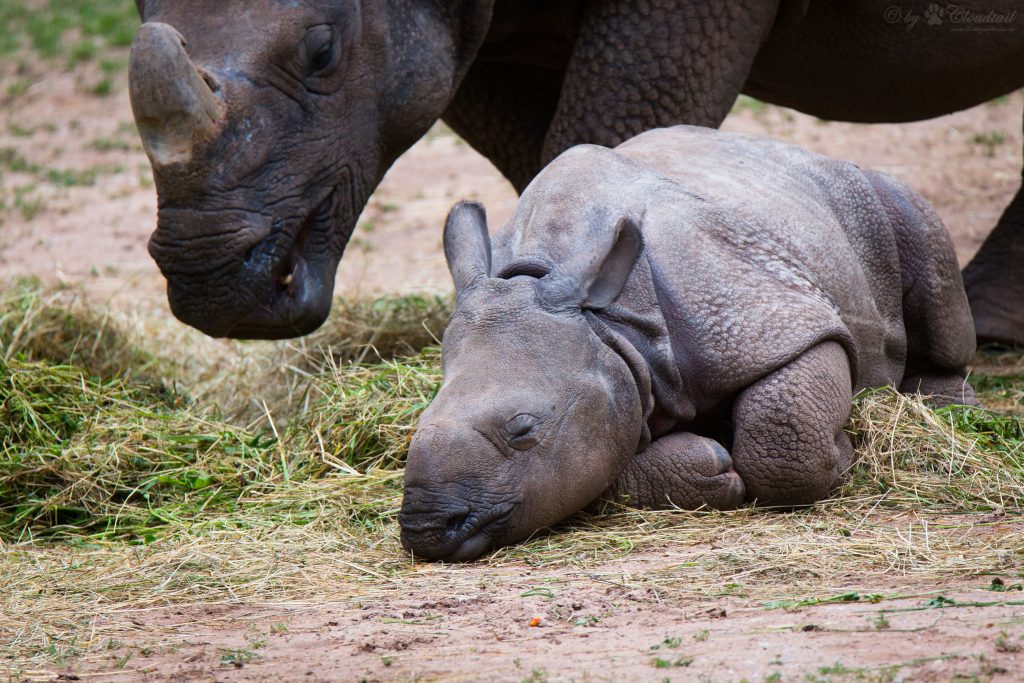
Adult male Indian Rhinoceros are usually solitary, except during mating and fights. Females are also largely solitary when without calves. Upon giving birth, groups consisting of females, calves, or up to six sub adults are formed. They usually congregate in wallows and grazing areas. The female rhino accompanies her calf for at least four years.
During fights, dominant male rhinoceros are quite aggressive and use their sharp lower teeth to attack their opponents, not their horn. During the aggressive fights, their thick coats protect the sensitive areas.
Birth & Offspring
The gestation period of the Indian Rhino is about 16 months. The calves spend their first four years with the mother, after which they start venturing on their own. The male rhinoceros does not take part in the upbringing of the offspring.
Senses
The Indian one-horn rhinoceros has a pretty good hearing and smell. However, their eyesight is very poor.

Lydia King is a huge animal lover and has always been fascinated with learning about the animal kingdom. She enjoys writing about anything animal related from scientific information about rare species to animal references in pop culture.