Scientific Name
Panthera tigris sumatrae
Description
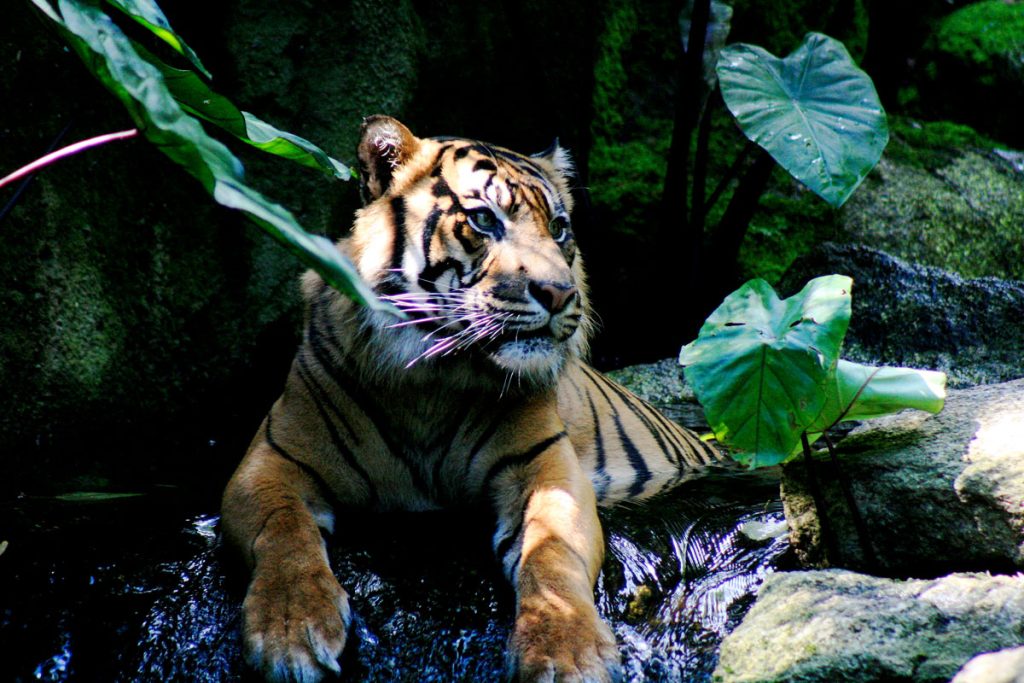
The Sumatran Tiger is one of the largest tigers in the tigers subspecies, although it’s smaller than the Indian Tiger. Like other tigers, the Sumatran Tiger is one of the most feared animals in the entire world. Unlike other subspecies of tiger, this particular species is characterized by stripes that are a little bit closer to each other.
Heavily built, the Sumatran tiger has extremely muscular front legs with large paws consisting of long, sharp claws. The back legs are strong and muscular as well for speed when running after its prey. The big can has a small yet strong jaw which gives it more strength when eating its prey.
Food
The Sumatran Tiger is obviously a carnivore. It commonly hunts and eats a wide range of prey including swamp deer, sambar, red deer, chital, Rusa deer, wild pigs, and others. On rare occasions however, the Sumatran Tiger will kill an elephant calf or a rhino. The tiger is not as fast as a cheetah when hunting for prey and thus, only 1 in 10 or 20 attempts to catch prey are usually successful. Because of this it mainly uses clever tactics like hiding in bushes or tall grass and abruptly ambushing its prey.
Habitat
Unlike lions and cheetahs, the Sumatran Tigers do not live in exposed areas. Because their hunting tactics involve ambushing prey when they least expect it, these tigers usually take cover in tall grass and bushes.
Social Structure
Usually, male Sumatran tigers are not part of any social circle. A basic social group often consists of a mother and her cubs in a single territory which may border with another female’s territory. Males often patrol territories containing about 3-4 female tigers. Each border is marked either through visual signs like scratch marks on trees or through scents.
Birth & Offspring
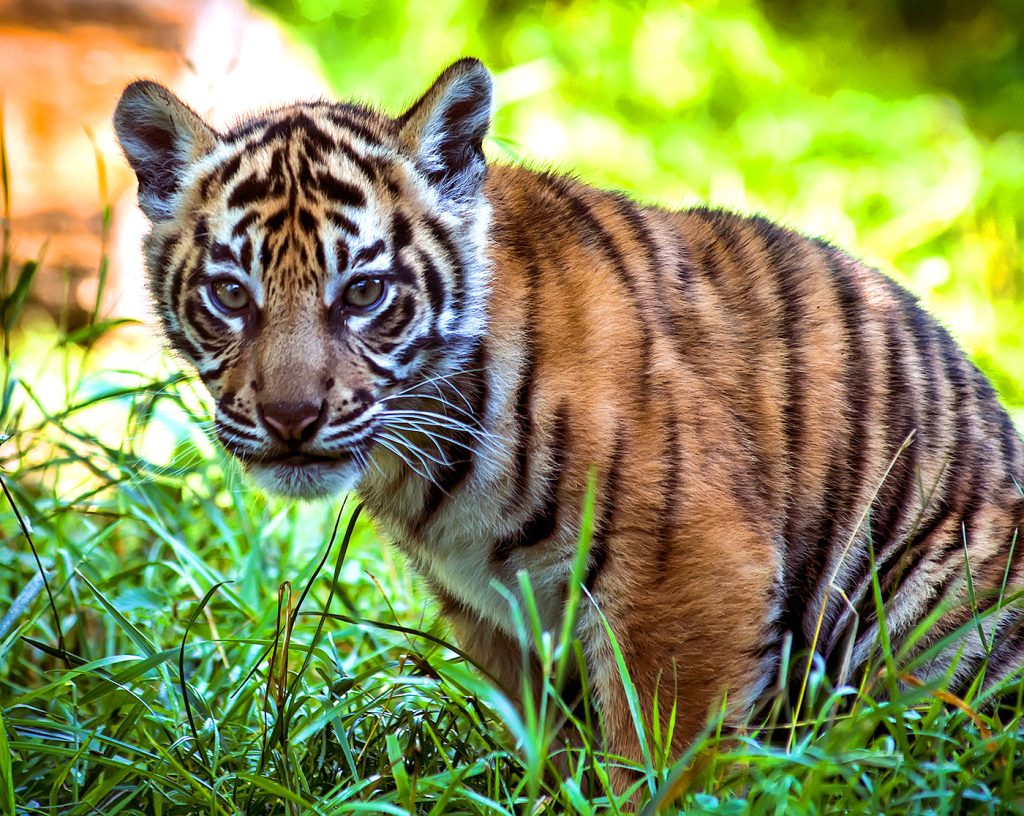
The gestation period of a female Sumatran tiger is 108 days, after which the mother gives birth to about two to four cubs. The cubs are usually born blind and thus completely helpless. The mother takes care of the young cubs, hunting and feeding them in the den. The male tiger does not take part in the upbringing of the cubs. Once they are old enough, they accompany their mother on hunts where they learn and perfect the art.
Senses
Like other cats, the Sumatran tiger has excellent hearing, smell, and eyesight. It relies on these when hunting. The tigers also use smell to mark their territory and deter others from stepping foot into it.

Lydia King is a huge animal lover and has always been fascinated with learning about the animal kingdom. She enjoys writing about anything animal related from scientific information about rare species to animal references in pop culture.